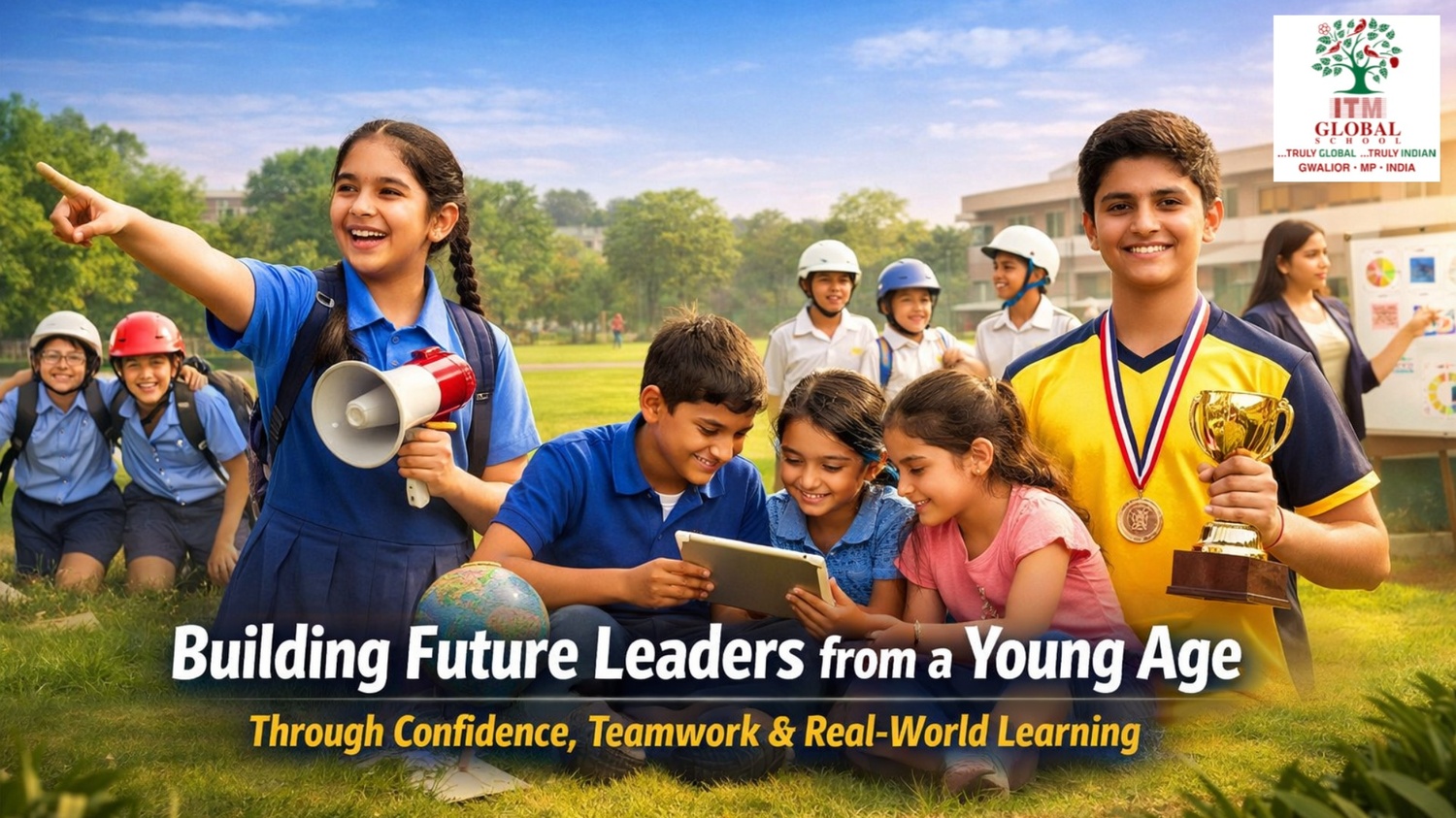
Leadership is not innate to children, but is a skill that develops over time via experiences and guidance and encouragement. Leadership skills are developed by children: through the ways they communicate themselves; take responsibility for their behaviour; and solve problems. Leadership is also related to those factors and directly affects how children perform in school and on the job throughout their lives.
Education is now much more than just academic subjects—it is designed to support the development of children’s character, team working, and confidence as well. Therefore, innovative schools such as ITM Global School provide a comprehensive form of education, helping children to grow as whole persons in addition to acquiring the Skills necessary for success in school.
By teaching their children to become leaders early on, parents in Gwalior will give their child an advantage throughout his or her life.
What are leadership skills in children?
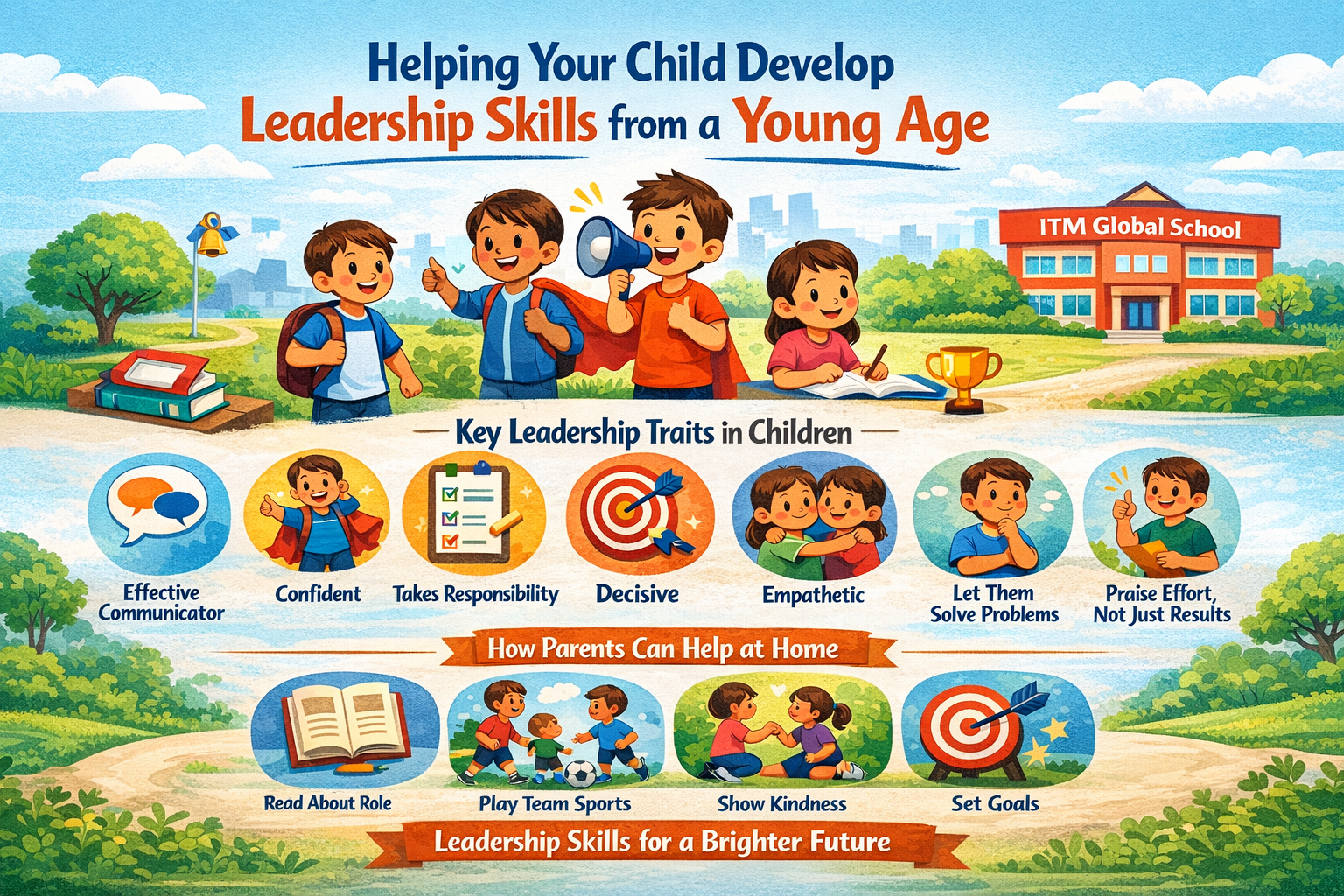
Leadership Traits:
1. Effective Communicator
2. Confident
3. Able to Make Decisions
4. Takes Responsibility
5. Empathizes with Others
6. Works as a Team Member
7. Able to Solve Problems
A child who has developed these leadership abilities can express themselves clearly, work cooperatively with others, show initiative and remain calm in the face of adversity.
A child who possesses these leadership traits will help them become successful in their academic studies, as well as their social interactions with others, ultimately preparing them for careers in which collaboration and critical thinking are critical.
Why should leadership development start at a young age?
Formal and informal learning occurs in early childhood and helps shape the development of habits, attitudes towards others, and social behaviours.
Child development research demonstrates that behaviour patterns developed before ten have a long-term impact on a child’s personality, emotional and relationship learning styles.
Children who learn to lead at an early age tend to participate more fully in class; have positive peer relationships; demonstrate greater confidence; and are more engaged academically.
Evaluations of youth development programs have consistently indicated that children exposed to structured youth leadership activities demonstrate increased confidence; teamwork; and problem-solving skills.
How can parents help develop leadership skills at home?
Give Small Responsibilities
Let your child manage simple tasks like packing their bag, organizing toys, or helping with meals. Responsibility builds independence.
Encourage Decision-Making
Allow children to make age-appropriate choices—clothing, hobbies, or study schedules. This strengthens confidence and judgment.
Teach Communication
Ask open-ended questions. Let them explain their thoughts. Good leaders learn to speak and listen.
Praise Effort, Not Just Results
Appreciate trying, not only winning. This builds resilience and a growth mindset.
Let Them Solve Problems
Instead of fixing every issue, guide children to think of solutions. This improves critical thinking.
What everyday habits build leadership qualities?
Little things have a huge impact on your life:
- Reading books about role models
- Playing team sports
- Showing kindness and respect
- You can show gratitude
- Setting reachable goals
More than just being perfect, being consistent is more important.
Leadership takes time to develop—it grows through continued support, role modeling, and providing opportunities for people to become leaders.
How can parents and schools work together?
For optimal leadership development, teachers and parents must work together and have an active role in their children’s education.
Parents must participate in school-sponsored events, stay in touch with teachers, and provide assistance at home to help with academic success. Conversely, schools must provide structured opportunities for students to have their voices heard and develop into confident learners to be able to face future educational challenges.
Final Takeaway
Leadership isn’t necessarily loud — it’s confidence, empathy, and taking responsibility as well as solving problems.
By providing kids with opportunities to take on responsibility, supporting their willingness to communicate with others, and creating learning environments that allow for cooperative sharing between teachers and students, parents and schools help develop individuals who are prepared to enter workforces of tomorrow.
A solid foundation has an impact on future career success.
The leadership skills we develop now will lead to success later on in our careers.