
Blog

How to Help Your Child Develop Leadership Skills from a Young Age

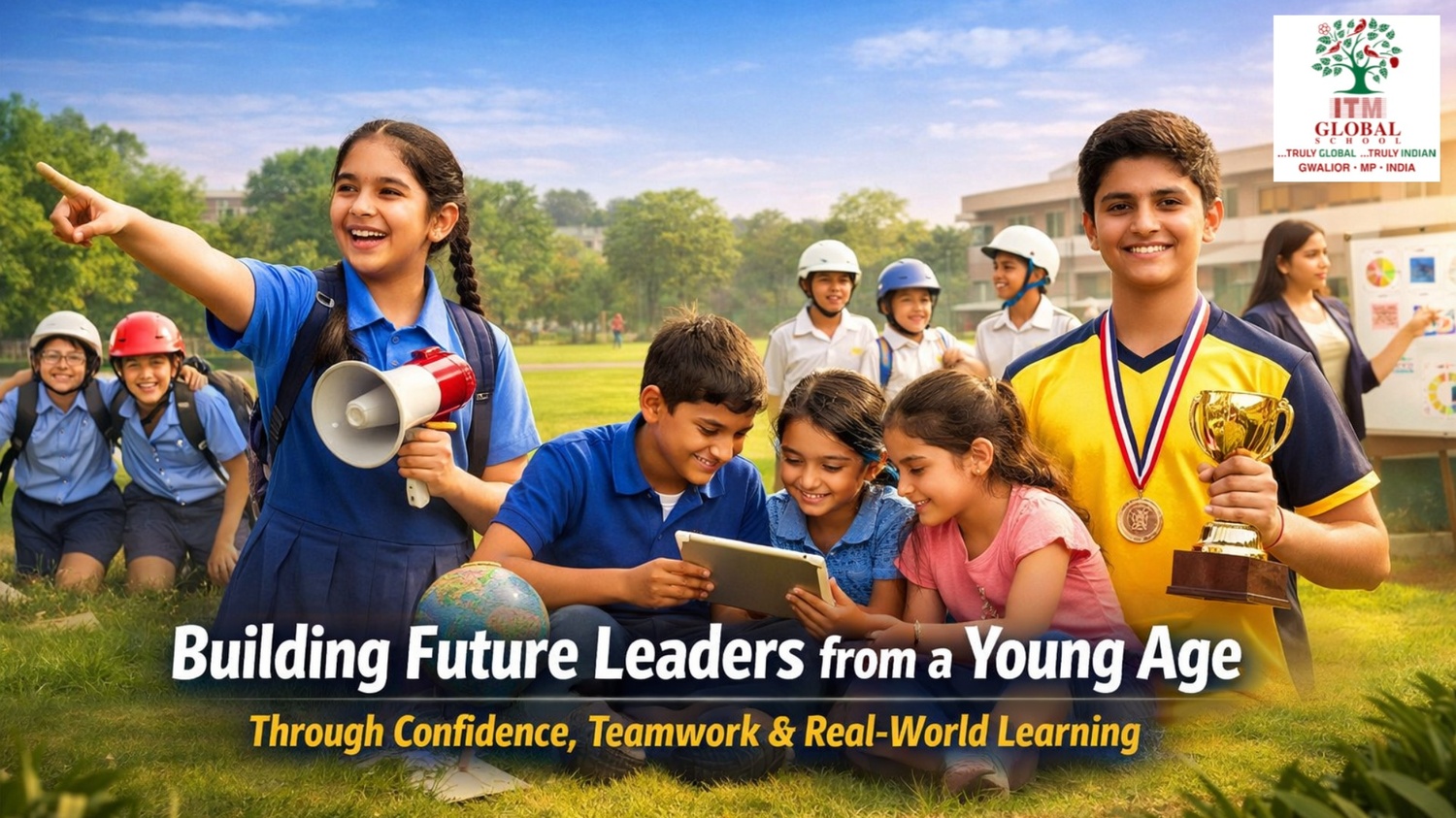
Children developing leadership skills through teamwork and activities at ITM Global School Gwalior

Leadership is not innate to children, but is a skill that develops over time via experiences and guidance and encouragement. Leadership skills are developed by children: through the ways they communicate themselves; take responsibility for their behaviour; and solve problems. Leadership is also related to those factors and directly affects how children perform in school and on the job throughout their lives.

Education is now much more than just academic subjects—it is designed to support the development of children’s character, team working, and confidence as well. Therefore, innovative schools such as ITM Global School provide a comprehensive form of education, helping children to grow as whole persons in addition to acquiring the Skills necessary for success in school.

By teaching their children to become leaders early on, parents in Gwalior will give their child an advantage throughout his or her life.

What are leadership skills in children?

Leadership Traits:

1. Effective Communicator
2. Confident
3. Able to Make Decisions
4. Takes Responsibility
5. Empathizes with Others
6. Works as a Team Member
7. Able to Solve Problems

A child who has developed these leadership abilities can express themselves clearly, work cooperatively with others, show initiative and remain calm in the face of adversity.

A child who possesses these leadership traits will help them become successful in their academic studies, as well as their social interactions with others, ultimately preparing them for careers in which collaboration and critical thinking are critical.

Why should leadership development start at a young age?

Formal and informal learning occurs in early childhood and helps shape the development of habits, attitudes towards others, and social behaviours.

Child development research demonstrates that behaviour patterns developed before ten have a long-term impact on a child’s personality, emotional and relationship learning styles.

Children who learn to lead at an early age tend to participate more fully in class; have positive peer relationships; demonstrate greater confidence; and are more engaged academically.

Evaluations of youth development programs have consistently indicated that children exposed to structured youth leadership activities demonstrate increased confidence; teamwork; and problem-solving skills.

How can parents help develop leadership skills at home?

Give Small Responsibilities

Let your child manage simple tasks like packing their bag, organizing toys, or helping with meals. Responsibility builds independence.

Encourage Decision-Making

Allow children to make age-appropriate choices—clothing, hobbies, or study schedules. This strengthens confidence and judgment.

Teach Communication

Ask open-ended questions. Let them explain their thoughts. Good leaders learn to speak and listen.

Praise Effort, Not Just Results

Appreciate trying, not only winning. This builds resilience and a growth mindset.

Let Them Solve Problems

Instead of fixing every issue, guide children to think of solutions. This improves critical thinking.

What everyday habits build leadership qualities?

Little things have a huge impact on your life:

  • Reading books about role models
  • Playing team sports
  • Showing kindness and respect
  • You can show gratitude
  • Setting reachable goals

More than just being perfect, being consistent is more important.

Leadership takes time to develop—it grows through continued support, role modeling, and providing opportunities for people to become leaders.

How can parents and schools work together?

For optimal leadership development, teachers and parents must work together and have an active role in their children’s education.

Parents must participate in school-sponsored events, stay in touch with teachers, and provide assistance at home to help with academic success. Conversely, schools must provide structured opportunities for students to have their voices heard and develop into confident learners to be able to face future educational challenges.

Final Takeaway

Leadership isn’t necessarily loud — it’s confidence, empathy, and taking responsibility as well as solving problems.

By providing kids with opportunities to take on responsibility, supporting their willingness to communicate with others, and creating learning environments that allow for cooperative sharing between teachers and students, parents and schools help develop individuals who are prepared to enter workforces of tomorrow.

A solid foundation has an impact on future career success.
The leadership skills we develop now will lead to success later on in our careers.
Read more

Best Boarding School in India – Why Choosing the Right Boarding School Matters for Your Child’s Future

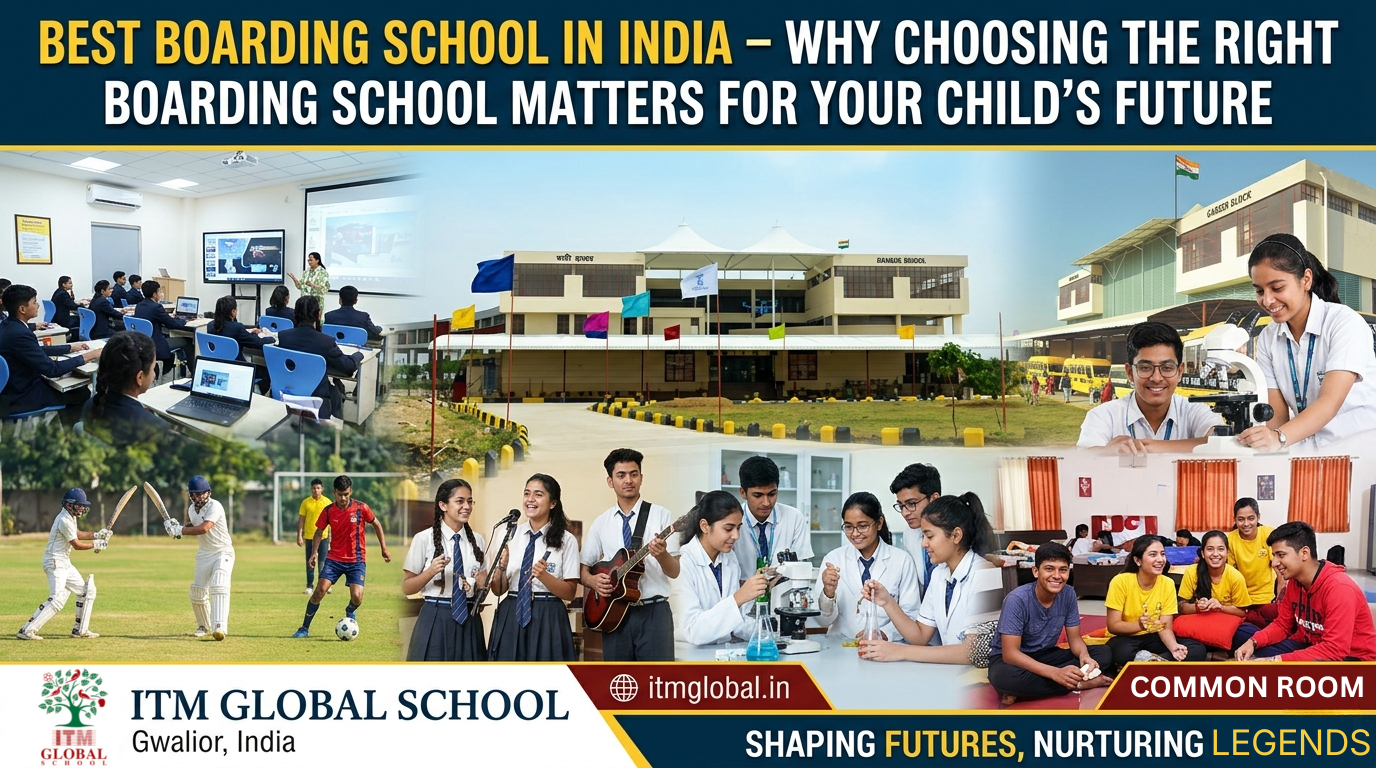
Students at ITM Global School, Gwalior enjoying academics, sports, science lab activities, and hostel life at a leading boarding school in India.

One of the most important choices parents make for their child’s education is which boarding school to send them to. A boarding school shapes a child’s habits, values, discipline, and general personality in addition to serving as a place of education. The demand for respectable boarding schools in India has increased dramatically as more parents seek out environments that are structured and promote holistic development.

This guide will help you understand what really makes a boarding school stand out if you’re looking for the best boarding school in India that provides excellent academics, exposure to the world, and a caring residential environment. Parents seeking a top-notch education with a welcoming campus community are increasingly choosing schools like ITM Global School, which offers both CBSE and Cambridge curriculum.

1. What Makes a Boarding School Truly “The Best”?

Prioritizes Academic  Achievement

A great boarding school is built on its strong academic programs. India’s top universities employ balanced, structured teaching methods that promote:

  • Clarity of concept
  • Thinking analytically
  • Working together to learn
  • Education that is prepared for the world

Students who attend schools that offer both CBSE and Cambridge boards have the benefit of selecting a course of study that is in line with their long-term objectives, whether they are to pursue higher education overseas or competitive exams in India.

2. Offers a Secure and Encouraging Living Space

A good school with dorms is one where students feel respected, safe, and taken care of. Children learn independence, time management, responsibility, and respect for others while living in a hostel. Typical examples of well-designed residential facilities are:

  • Cozy hostels
  • nutritious meals
  • round-the-clock supervision Medical assistance
  • Recreational spaces
  • Daily routines that are structured

To make sure students feel at home while gaining life skills, schools like ITM Global School prioritize striking a balance between comfort and discipline.

3. Why Choose a Boarding School for Your Child?

Day schools frequently fall short of the many benefits that boarding schools provide. Here’s why a lot of parents now think they’re the ideal option:

1. Improved Time Management and Discipline

Students develop discipline organically when they have set routines, study times, and extracurricular activities. They acquire the ability to:

  • Control your time
  • Set priorities for your tasks.
  • Keep things tidy.
  • Adopt wholesome practices

They frequently retain these traits throughout their lives.

2. Diversity Exposure

In a boarding school, students from various regions and backgrounds come together. This benefits them:

  • Make friends
  • Improve your ability to communicate
  • Recognize diversity
  • Develop socially and emotionally

It gets them ready for both global workplaces and university life.

4. What to Look for in the Best Boarding School in India

Choosing the right school requires careful consideration. Here are the most important factors:

1. Educational Choices

A school can accommodate various learning styles and offer flexibility if it offers multiple boards, such as Cambridge and CBSE. While CBSE is great for competitive exams in India, Cambridge is more globally oriented.

2. Facilities and Infrastructure

Verify whether the school has:

  • Contemporary classrooms
  • Computer, robotics, and science labs
  • Big playgrounds
  • Studios for the arts and music
  • Hostels that are kept up
  • Systems of security

Better education and comfortable living are supported by a robust infrastructure.

3. Skilled Instructors

In addition to being subject matter experts, teachers should be personable mentors who can help students both academically and emotionally.

5. Benefits of Choosing a School With Hostel Facility

A school with a hostel facility offers everything a child needs under one roof. The biggest benefits include:

  • Continuous academic support
  • A structured life for better learning
  • Increased sports participation
  • Access to co-curricular activities
  • Safe and monitored campus life
  • Reduced travel stress

Parents also gain peace of mind knowing their child is in a well-regulated environment.

6. How ITM Global School Fits Into the Picture

With decades of dedication to high-quality education, ITM Global School has emerged as a top choice for parents seeking a well-rounded combination of contemporary academics and a values-based education.

This is what makes it unique:

  • Options for a dual curriculum: Cambridge + CBSE
  • A strong emphasis on academic achievement
  • Top-notch facilities and campus
  • A well-organized hostel setting
  • A focus on comprehensive development
  • Skilled and compassionate instructors
  • Safe and secure living in a home

Conclusion

A boarding school is more than just a place to learn; it’s a life-changing experience that molds a child. Boarding school produces well-rounded people who are prepared to face challenges in the future by fostering independence and laying solid academic foundations.

Selecting the right school is the first step if you’re searching for a hostel that offers academic excellence, exposure to the world, and a caring environment. Schools like ITM Global School have demonstrated that boarding life can be one of the most fulfilling stages of a student’s journey when given the right direction, structure, and support.


Read more

How to Help Your Child Develop Leadership Skills from a Young Age

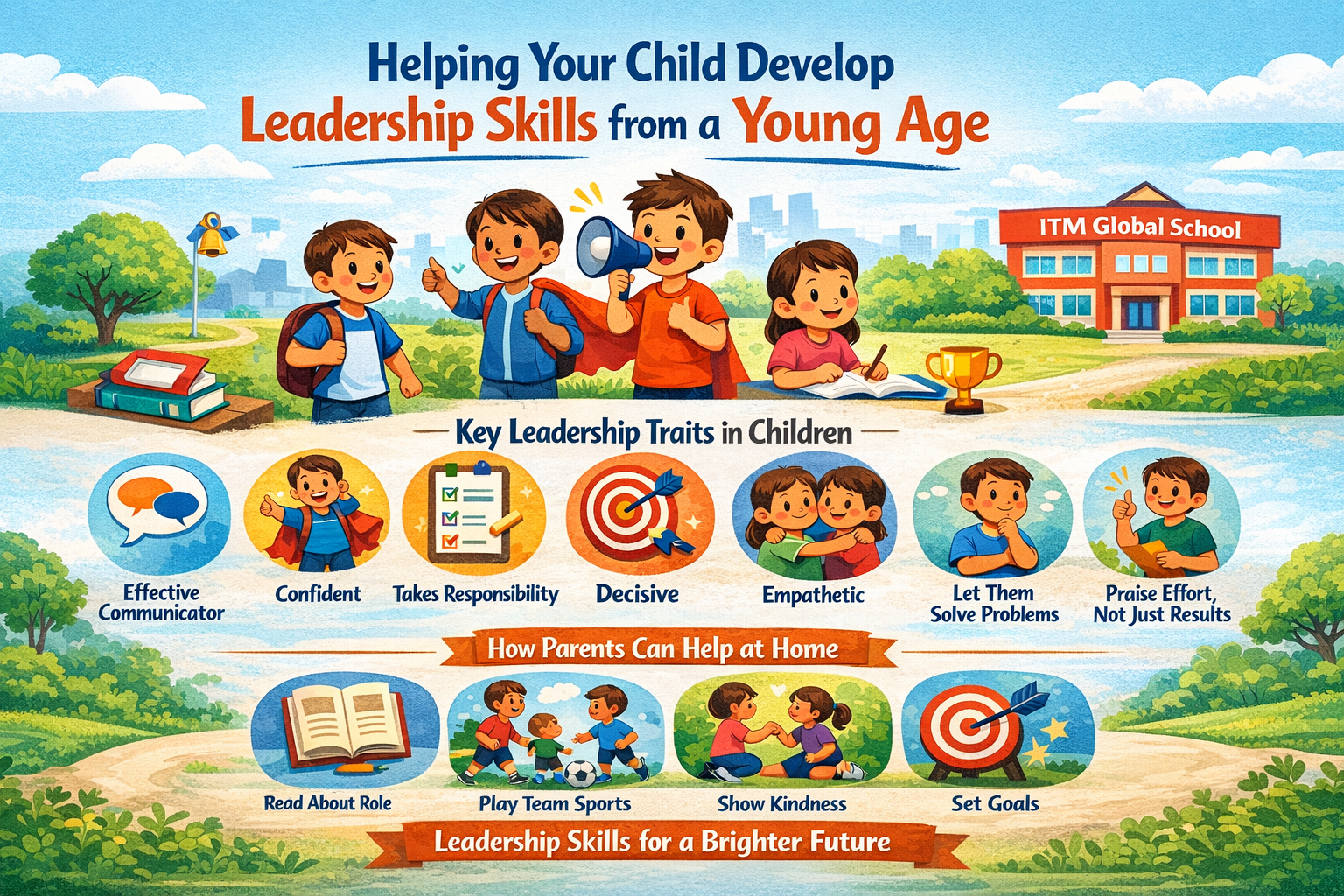
Developing leadership skills in children through teamwork, communication, and responsibility

Leadership is not innate to children, but is a skill that develops over time via experiences and guidance and encouragement. Leadership skills are developed by children: through the ways they communicate themselves; take responsibility for their behaviour; and solve problems. Leadership is also related to those factors and directly affects how children perform in school and on the job throughout their lives.  

Education is now much more than just academic subjects—it is designed to support the development of children’s character, team working, and confidence as well. Therefore, innovative schools such as ITM Global School provide a comprehensive form of education, helping children to grow as whole persons in addition to acquiring the Skills necessary for success in school. 

By teaching their children to become leaders early on, parents in Gwalior will give their child an advantage throughout his or her life. 

What are leadership skills in children? 

Leadership Traits: 

  1. Effective Communicator 
  2. Confident 
  3. Able to Make Decisions 
  4. Takes Responsibility 
  5. Empathizes with Others 
  6. Works as a Team Member 
  7. Able to Solve Problems 

A child who has developed these leadership abilities can express themselves clearly, work cooperatively with others, show initiative and remain calm in the face of adversity. 

A child who possesses these leadership traits will help them become successful in their academic studies, as well as their social interactions with others, ultimately preparing them for careers in which collaboration and critical thinking are critical. 

Why should leadership development start at a young age? 

Formal and informal learning occurs in early childhood and helps shape the development of habits, attitudes towards others, and social behaviours. 

Child development research demonstrates that behaviour patterns developed before ten have a long-term impact on a child’s personality, emotional and relationship learning styles. 

Children who learn to lead at an early age tend to participate more fully in class; have positive peer relationships; demonstrate greater confidence; and are more engaged academically. 

Evaluations of youth development programs have consistently indicated that children exposed to structured youth leadership activities demonstrate increased confidence; teamwork; and problem-solving skills. 

How can parents help develop leadership skills at home? 

Give Small Responsibilities 

Let your child manage simple tasks like packing their bag, organizing toys, or helping with meals. Responsibility builds independence. 

Encourage Decision-Making 

Allow children to make age-appropriate choices — clothing, hobbies, or study schedules. This strengthens confidence and judgment. 

Teach Communication 

Ask open-ended questions. Let them explain their thoughts. Good leaders learn to speak and listen. 

Praise Effort, Not Just Results 

Appreciate trying, not only winning. This builds resilience and a growth mindset. 

Let Them Solve Problems 

Instead of fixing every issue, guide children to think of solutions. This improves critical thinking. 

What everyday habits build leadership qualities? 

Little things have a huge impact on your life: 

  • Reading books about role models 
  • Playing team sports 
  • Showing kindness and respect 
  • You can show gratitude 
  • Setting reachable goals 

More than just being perfect, being consistent is more important. 

Leadership takes time to develop – it grows through continued support, role modeling, and providing opportunities for people to become leaders. 

How can parents and schools work together? 

For optimal leadership development, teachers and parents must work together and have an active role in their children’s education. 

Parents must participate in school-sponsored events, stay in touch with teachers, and provide assistance at home to help with academic success. Conversely, schools must provide structured opportunities for students to have their voices heard and develop into confident learners to be able to face future educational challenges. 

Final Takeaway

Leadership isn’t necessarily loud — it’s confidence, empathy, and taking responsibility as well as solving problems. 

By providing kids with opportunities to take on responsibility, supporting their willingness to communicate with others, and creating learning environments that allow for cooperative sharing between teachers and students, parents and schools help develop individuals who are prepared to enter workforces of tomorrow. 

A solid foundation has an impact on future career success. 

The leadership skills we develop now will lead to success later on in our careers. 



Read more